%20file.png)

Your Guide to Buying Real Estate in Dubai
Picture this: you wake up, coffee in hand, gazing out at the iconic Dubai skyline or the tranquil turquoise waters of the Arabian Gulf. Buying real estate in Dubai isn't just about acquiring property; it's about stepping into a world-class lifestyle. This guide is here to walk you through that journey, turning your dream into a reality.
Your Dubai Property Dream Starts Now
Jumping into the Dubai property market is an exciting move. The city’s relentless energy, combined with an incredibly investor-friendly environment and unmatched infrastructure, makes it a magnet for homeowners and investors alike. You're not just buying an asset; you're securing a stake in a future buzzing with growth and opportunity.
Think of this guide as your personal roadmap. We’ll cut through the complexity and show you exactly what's possible in this incredible city, giving you the confidence to take the next step. From that first flicker of an idea to the moment you’re handed the keys, we’ve got your back.
Off-Plan vs Ready Property: Your First Major Decision
Your adventure in Dubai real estate starts with one big question that will shape everything that follows: do you buy off-plan (directly from a developer before it's built) or a ready property (an existing home)? Each option has its own unique perks and suits different ambitions.
Buying off-plan often means getting in at a lower price point and benefiting from attractive, staggered payment plans while the property is under construction. For many, this is a savvy play for capital appreciation, as the value can climb substantially by the time you get the keys.
On the flip side, a ready property gives you instant results. You can move in right away or start earning rental income from day one. There are no surprises about the final look and feel or any delays in completion. This path offers the security of a tangible asset you can see and touch before you buy. For more great advice, these ten tips to consider when buying a property are well worth a read.
Your choice here really defines your investment strategy. Are you playing the long game for potential growth with an off-plan unit, or do you need the immediate returns and certainty that come with a ready home?
To help you figure out which path is right for you, let’s break down the key differences. This simple comparison is designed to give you a clear picture of what to expect with each option.
Off-Plan vs Ready Property Key Differences
Consideration | Off-Plan Property | Ready Property |
|---|---|---|
Pricing | Often lower, with attractive introductory offers. | Based on current market value; less room for negotiation. |
Payment Structure | Flexible payment plans spread over the construction period. | Upfront payment, typically through a mortgage or cash. |
Capital Growth | High potential for appreciation by the time of completion. | Appreciation is tied to market trends after purchase. |
Rental Income | No income until the property is handed over. | Immediate rental returns are possible from day one. |
Risk & Uncertainty | Potential for construction delays or market fluctuations. | What you see is what you get; minimal completion risk. |
Customisation | Sometimes possible to choose finishes and layouts. | Limited to renovations after the purchase is complete. |
Ultimately, understanding these trade-offs is the first crucial step. It ensures your property journey in Dubai’s incredible market gets started on solid ground, perfectly aligned with your personal and financial goals.
Reading the Dubai Real Estate Market
To get a real edge when buying property in Dubai, you have to do more than just browse listings. You need to develop a feel for the market's rhythm, understanding its pulse like a seasoned analyst. This isn't just about crunching numbers; it's about gaining the strategic foresight to spot genuine value, negotiate from a place of confidence, and turn a simple purchase into a brilliant investment.
Dubai's property scene is anything but static. It's constantly shaped by new project launches, evolving buyer moods, and the wider economic currents. Getting a handle on these movements is your ticket to making a decision you can stand by, whether you're hunting for a family home or a high-yield asset.
Analysing Supply and Demand Dynamics
The delicate dance between the supply of new homes and the demand from buyers sets the tone for everything, from property prices to potential rental income. Lately, Dubai has seen a massive wave of new developments come to life, creating a fascinating, opportunity-rich playground for anyone looking to buy.
An incredible 87,900 new real estate units were launched, marking a massive 171% increase from the year before. But here's where it gets interesting: this flood of new properties happened at the same time the resale market started to cool off, with secondary sales dropping by 31.15% between April and August. This data paints a clear picture of a market in transition. The bullish, fast-paced energy is giving way to a more measured environment, where thoughtful, value-conscious buyers are taking centre stage. As detailed in this insightful Dubai real estate market report, we're moving towards a more balanced, buyer-friendly climate.
What does this mean for you? It means you have more choices than ever. It's a fantastic time to find properties that might have seemed out of reach just a year ago, but it also means being selective is more important than ever.
Key Market Trends to Watch
Looking past the headline supply figures, a few key trends are really shaping the opportunities on the ground. One of the biggest shifts is the growing appetite for smaller, more affordable properties. As the price per square foot has ticked upwards, savvy buyers have adjusted, fuelling strong demand for one- and two-bedroom apartments.
Here are a few other critical trends I always keep an eye on:
Villas vs Apartments: There's often a gap in performance between these two. While villas had their moment in the sun with explosive growth after the pandemic, the spotlight is now swinging back to well-located apartment communities packed with amenities, offering both convenience and a more accessible entry price.
Rental Yield Adjustments: With more supply comes more competition for tenants, which naturally causes rental yields to adjust. We recently saw them dip from 6.99% to 6.76% year-on-year. While these are still fantastic returns on a global scale, it’s a clear signal that property owners need to stay competitive. For you, the buyer, it reinforces the need to buy at the right price to secure your ROI.
A Flight to Quality: When the market gets competitive, quality always wins. Premium locations and top-tier construction hold their value far better. I always see areas with great infrastructure, community perks, and easy transport links continue to outperform the rest.
This isn't a market for chasing quick, speculative profits anymore. It's about making smart, strategic acquisitions. The goal is to find the right property in the right location that promises not just long-term growth, but also reliable rental income along the way.
Forecasting Price and Yield Potential
To see where the market is headed, you have to look back at where it's been. Diving into historical data and future projections is essential. At the heart of it all is knowing what a property is truly worth, which is why getting a professional assessment is so vital. You can get a much deeper understanding of this in our complete guide to property valuation in Dubai. A proper valuation doesn't just give you a number; it gives you a benchmark, empowering you to know if a listing is a great deal or simply overpriced.
The chart below gives you a glimpse into the market's historical price cycles.
This visual history lesson shows clear periods of intense growth followed by stabilisation. It’s a powerful reminder of why a long-term perspective is your best friend when investing in Dubai. By understanding these cycles, you can position yourself to buy when opportunity knocks and hold on for that long-term appreciation.
Your Purchase Blueprint: From Offer to Ownership
This is where it gets real. Moving from simply browsing listings to putting in an offer is a massive step, one that turns your dream of owning a home in Dubai into a tangible plan. The path from that initial offer to finally getting the keys can feel like a maze, but when you break it down, it’s a clear and manageable journey. Let's walk through it together.
This infographic captures the bigger picture, showing how new properties entering the market influence the resale landscape and, ultimately, the value you're looking to secure.
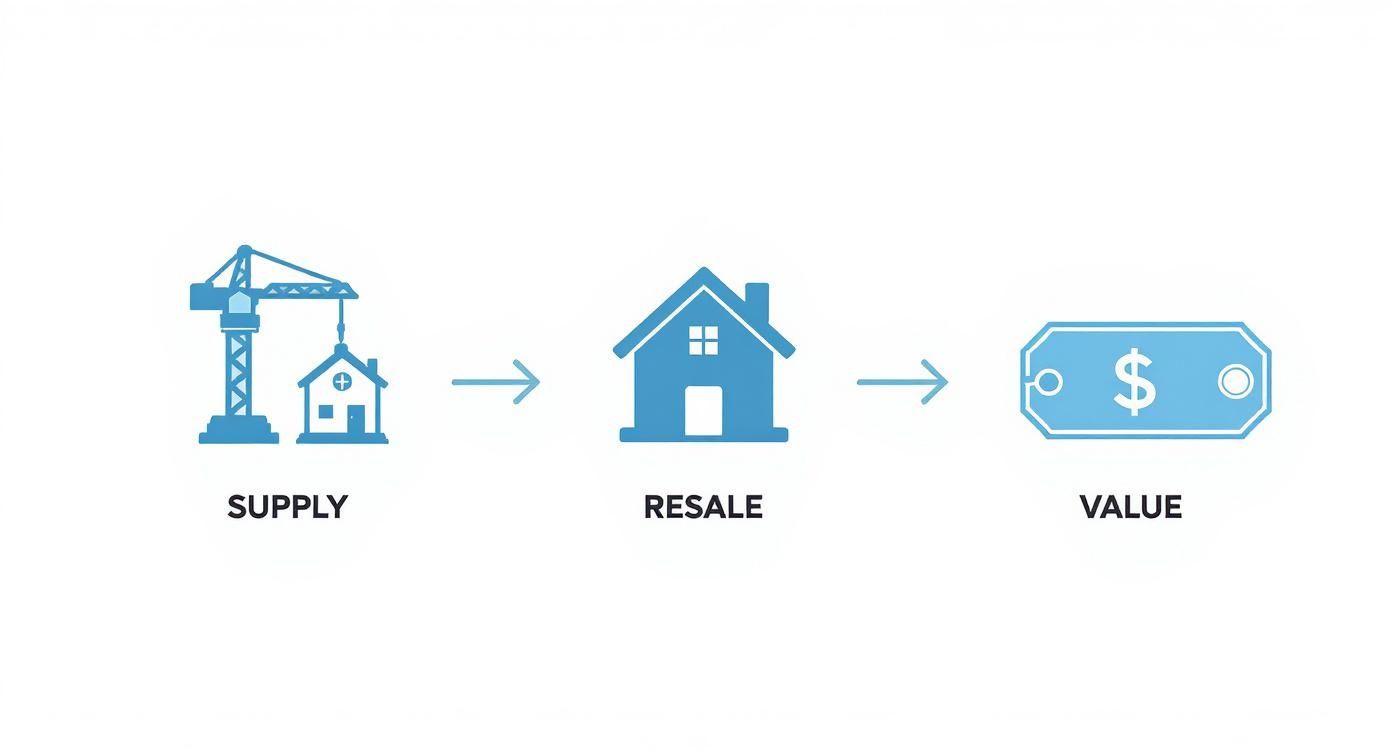
Understanding this flow is crucial. It shows how the influx of new construction creates a dynamic secondary market, making it essential for buyers like you to know how to find genuine value.
Get Your Finances in Order First
Before you even think about making an offer, your first move should be to get a mortgage pre-approval. Honestly, this is your golden ticket in Dubai's property market. It’s not just about knowing what you can afford; it’s about showing sellers you’re a serious buyer who is ready to go.
In a market this competitive, a pre-approval letter gives you instant credibility. Imagine a seller with two identical offers on the table. One is from a buyer who thinks they can get a mortgage, and the other is from you, with a bank’s commitment already in hand. Which one do you think they’ll choose?
Find Your Expert Guide: A RERA-Certified Agent
With your financing sorted, it's time to find a great RERA-certified real estate agent. This isn’t just about getting access to properties. It's about partnering with an advocate who genuinely understands the ins and outs of buying real estate in Dubai and will fight for your best interests.
A top-tier agent does so much more than unlock doors for viewings. They bring invaluable market knowledge to the table, handle tough negotiations, and make sure every piece of paperwork is perfectly in order. Don’t rush this; find someone you connect with and trust. Their expertise is one of the best investments you'll make in this process.
From Offer to Agreement: The MOU
You’ve found it—the perfect place. Now it's time to make your move. Preparing a formal offer to purchase form is the first concrete step towards making that property yours.
Once the seller verbally agrees to your offer, the next legal step is signing a Memorandum of Understanding (MOU), also known as Form F. This is a legally binding contract that spells out all the agreed-upon terms—the price, payment schedule, and handover date.
The MOU is a massive milestone. It officially locks in both you and the seller. At this stage, you'll provide a security deposit cheque, usually for 10% of the purchase price, which your agent holds in escrow. It’s a serious commitment; the cheque is only cashed if you back out of the deal.
Navigating Developer and DLD Approvals
With the MOU signed, the paperwork phase truly kicks in. The first major item on the checklist is getting a No Objection Certificate (NOC) from the building's master developer. This document is essential, as it confirms the seller has settled all their service charges and has no outstanding financial obligations tied to the property.
Obtaining the NOC is a non-negotiable step required by the Dubai Land Department (DLD). Your agent will usually handle the legwork, but it’s a crucial bit of due diligence that protects you from inheriting the previous owner’s debts. For a deeper dive into what to check, our guide on https://www.cnco.ae/post/property-inspection-dubai-expert-guide-costs has you covered.
The Final Step: Transfer of Ownership
The finish line is at the Dubai Land Department (DLD) transfer office. This final appointment is where the property officially becomes yours.
Here’s what happens on transfer day:
Final Payments: All outstanding balances are cleared. You’ll give the seller a manager’s cheque for the remaining amount.
Fee Settlement: The DLD transfer fees and agent commissions are paid.
Title Deed Issuance: Once all payments are confirmed and the paperwork is double-checked, the DLD issues a brand-new title deed with your name on it.
This is the moment it all comes together. Holding that title deed is the triumphant conclusion to your journey—you are officially a property owner in one of the world's most exciting cities.
Getting to Grips with the Financial and Legal Side of Things
A truly great investment is one you understand inside and out. When it comes to buying real estate in Dubai, this means looking far beyond the sticker price to grasp every financial and legal detail that will shape your purchase. This kind of clarity is what turns a good decision into a secure, profitable one for years to come.
Think of the property's sale price as just your starting line. To budget with real confidence, you need to factor in several mandatory fees that come with the territory. These aren't hidden costs, but knowing them upfront is crucial for a smooth and legally sound transfer of ownership.
What to Expect in Upfront Costs
The biggest line item to plan for is the Dubai Land Department (DLD) transfer fee, which stands at 4% of the property's purchase price. While it's technically supposed to be split between the buyer and seller, it's pretty standard practice in the market for the buyer to cover the whole amount. This is a non-negotiable government charge, and it's what officially registers the property in your name.
Beyond the DLD fee, a few other costs will be part of your initial outlay:
Real Estate Agent Commission: This is typically 2% of the purchase price, plus a 5% Value Added Tax (VAT) on the commission amount itself. Your agent is an indispensable partner in this journey, and this fee covers their expertise, guidance, and hard work.
Mortgage Registration Fee: If you're financing your purchase with a bank loan, the DLD charges 0.25% of the total loan amount to register the mortgage against the property's title deed.
Title Deed Issuance Fee: This is a fixed administrative cost of approximately AED 580 for the physical printing and issuance of the new title deed in your name.
To help you visualise these costs, here's a simple breakdown based on a hypothetical property purchase.
Estimated Buyer Costs Breakdown
Fee/Cost Item | Percentage/Amount | Responsibility |
|---|---|---|
DLD Transfer Fee | 4% of Purchase Price | Buyer |
Real Estate Agent Commission | 2% of Purchase Price (+ 5% VAT) | Buyer |
Mortgage Registration Fee | 0.25% of Loan Amount | Buyer (if financed) |
Trustee Registration Fee | AED 4,000 (+ 5% VAT) | Buyer |
Title Deed Issuance Fee | ~AED 580 | Buyer |
This table gives you a clear snapshot of the main fees you'll encounter. Always ask your agent for a detailed cost sheet so you have a precise understanding of the total funds you'll need to close the deal.
Navigating the mountain of paperwork, from the initial offer to the final handover, can be daunting. Exploring effective real estate document automation tools can make a world of difference, ensuring every form and contract is handled accurately and efficiently. And for a really deep dive into the numbers behind mortgages, don't miss our complete guide to mortgages in Dubai.
The Legal Framework: Understanding Your Ownership
Just as important as the numbers is understanding your ownership rights. When you buy property in Dubai as a foreign national, your ownership will generally fall into one of two categories, and the difference between them is massive.
Freehold ownership is the gold standard. It gives you absolute title to both the property and the land it sits on. This means you have the freedom to sell, lease, or pass down the property as you see fit. This is the most sought-after form of ownership for expatriates and is available in specially designated areas across the city, like Dubai Marina, Downtown Dubai, and Palm Jumeirah.
Leasehold ownership, on the other hand, gives you the right to use the property for a fixed, long-term period—usually up to 99 years. You own the apartment or villa itself, but not the land beneath it. While it can sometimes be a more affordable way to get into the market, it doesn't offer the same permanent security and long-term value as freehold.
For any international investor looking to build real, lasting wealth in Dubai, freehold is almost always the way to go. It provides the ultimate security and control over your asset, making it a true investment in every sense of the word.
The Dubai property market continues to show incredible resilience, fuelled by strong and diverse demand. In the first half of the year alone, the Dubai Land Department recorded a staggering 94,000 residential sales. That's a 23.04% jump year-on-year, with the total value of those transactions soaring by 37.68% to reach AED 262.7 billion. This confidence is pushing prices up, with the overall Residential Market Sales Price Index rising by 15.60%. This isn't just hype; it's hard data showing the deep-seated confidence buyers have in this market.
The Power of Doing Your Homework
Finally, and this is something I can't stress enough, never underestimate the power of thorough due diligence. If you're buying a ready property, that means verifying the title deed is clean and free of any mortgages or legal claims.
For an off-plan purchase, your focus shifts to the developer. Dig into their track record. Visit their previously completed projects. Most importantly, make sure your Sale and Purchase Agreement (SPA) has crystal-clear handover dates and spells out the compensation you'll receive for any potential delays. A secure purchase is always a well-researched one.
Insider Strategies for a Smarter Investment
This is the point where you stop thinking like a buyer and start acting like a seasoned investor. The unwritten rules of Dubai's dynamic property market are what truly separate an average purchase from a visionary one. It’s about so much more than finding a nice apartment; it's about making a strategic move that secures your financial future with confidence.
By mastering a few proven strategies, you can completely shift the outcome of your purchase. From leveraging hard data in negotiations to understanding the long-term vision of a community, these are the professional insights that empower you to make smarter, more profitable decisions when buying real estate in Dubai.
Negotiate from a Position of Strength
Think of the asking price as merely a conversation starter. The secret to landing the best possible deal isn’t about haggling; it's about anchoring your offer in solid, undeniable data. This is where a great agent proves their worth. They should be pulling a detailed report of recent, comparable sales—what we call ‘comps’—for similar properties in the very same building or community.
Go through these comps with a fine-tooth comb. If an identical unit sold for 5% less just two months ago, you've just found your leverage. When you present this evidence, your offer is no longer just a hopeful number. It becomes a well-reasoned business proposal that sellers and their agents have to take seriously.
Define Your Investment Goal Clearly
What does the "perfect" location actually mean to you? The answer depends entirely on your end goal. Are you hunting for the highest possible rental yields, aiming for long-term capital appreciation, or simply searching for the ideal lifestyle for your family? Each objective points you to a completely different corner of the city.
For Maximum Rental Income: Your focus should be on areas with a constant stream of young professionals and tourists. Think Dubai Marina or Downtown Dubai, where proximity to Metro stations and major attractions is king.
For Long-Term Capital Growth: Start exploring up-and-coming communities where major infrastructure projects are on the horizon. New schools, sprawling malls, or game-changing transport links are your green flags. The areas along the Expo 2020 corridor are a fantastic example of this in action.
For the Ideal Lifestyle: This is all about what feels right for you. If you have a family, the green spaces, top-tier schools, and community feel of places like Arabian Ranches or Dubai Hills Estate will likely top your list.
A clear goal is your compass. It keeps you from getting sidetracked by shiny objects and ensures the property you ultimately choose is perfectly aligned with the life and the returns you envision.
Scrutinise the Bigger Picture
Don't just fall in love with the property; you need to investigate the entire community's master plan. A stunning apartment in a poorly planned neighbourhood is a recipe for underperformance. You need to look for the tell-tale signs of a thriving, well-managed community: impeccably maintained parks, bustling retail spaces, and a palpable sense of community.
The recent property boom here has been nothing short of remarkable. Between mid-2020 and mid-2023, Dubai's real estate prices surged by an incredible 50%, leaving many other global hubs in the dust. This growth was supercharged by a massive influx of new residents, which swelled the population by nearly 15% since 2020.
While this signals incredible confidence in the city, it also means that savvy investors must be more selective than ever. You have to focus on areas with sustainable, long-term value. You can dive deeper into the full findings on these global real estate trends from UBS to get a better sense of the market's trajectory.
Ask the Right Questions for Off-Plan vs Ready
Deciding between an off-plan project and a ready property is a major fork in the road, and each path has its own set of critical questions. Asking them upfront will protect your investment and save you from major headaches down the line.
For Off-Plan Properties:
What is the developer’s track record for completing projects on time?
Is the project officially registered with RERA, and more importantly, is the escrow account active?
What are the exact compensation terms for project delays outlined in the SPA? Don't accept vague promises.
For Ready Properties:
What are the annual service charges, and can you see a history of them? Have there been any sudden, sharp increases?
How healthy is the building’s reserve fund for future major maintenance? (You don't want a surprise special assessment!)
Are there any known, ongoing issues with the building management or the common facilities?
Remember, a smart property purchase can also be a strategic move toward securing your future in the UAE. For those interested, our guide on turning your property into a Golden Visa opportunity breaks down how your investment can pave the way for long-term residency.
Your Questions Answered: Navigating the Dubai Property Market
Even the most well-prepared buyer has questions. It's completely natural. Buying property anywhere is a huge step, and in a dynamic market like Dubai, a few "what ifs" are bound to pop into your head. Think of this as your practical go-to guide for those lingering uncertainties.
We've heard all the questions over the years, and we're here to give you clear, straightforward answers. Getting these details sorted is the final piece of the puzzle, giving you the confidence to move forward without any surprises.
Can My Property Investment Get Me a Residence Visa?
Yes, absolutely. This is one of the biggest reasons international buyers flock to Dubai. Your property can be a direct ticket to long-term residency in the UAE, unlocking a whole new world of lifestyle and business opportunities. The rules are pretty clear and are tied directly to how much you invest.
Here’s the breakdown:
The 2-Year Visa: If you purchase a property worth at least AED 750,000, you become eligible to apply for a 2-year renewable residence visa.
The 10-Year Golden Visa: For those looking for a more permanent base, an investment of AED 2 million or more in real estate can qualify you for the highly sought-after 10-year Golden Visa.
A couple of key things to remember: for either visa, the property must be a freehold residential unit. If you've taken out a mortgage, you'll need to have paid off a certain amount of the loan to qualify. These visas also allow you to sponsor your family, which is a fantastic benefit for anyone planning to build a life here.
What's the Real Difference Between Freehold and Leasehold?
Getting your head around this is crucial—it fundamentally shapes your investment.
Freehold ownership is what most people imagine when they think of buying a home. It gives you absolute, permanent ownership of both the property and the land it sits on. You can sell it, rent it out, or leave it to your family in your will. For expats, this is the gold standard, offering total security and control. You'll find freehold properties in specific, designated zones all across Dubai.
Leasehold ownership, on the other hand, is more like a very long-term rental. You get the right to use the property for a fixed period, which can be up to 99 years, but you never actually own the land. While it might seem cheaper upfront, freehold is hands-down the better option for long-term security and investment growth. It's the route most international buyers take for a reason.
What if My Off-Plan Project Gets Delayed?
It’s a valid concern. Delays can happen in any booming construction market. The good news is that Dubai’s Real Estate Regulatory Agency (RERA) has put strong protections in place for buyers. Your main line of defence is your Sale and Purchase Agreement (SPA).
Your SPA is a legally binding contract that should clearly state the expected completion date, plus a grace period—usually around 12 months.
If the developer sails past this grace period, your contract should outline your right to compensation. In the very rare case that a project is officially cancelled, your money is safe in a protected escrow account, ensuring you get a full refund. This is why it’s so important to have a legal expert look over your SPA before you sign anything; you need to know exactly what your rights are.
Are There Any Ongoing Taxes or Fees I Should Know About?
Dubai is famous for its tax-friendly environment—no income tax, no capital gains tax—but owning property does come with some ongoing responsibilities. The main one you'll encounter is the annual community service charge.
These fees are what keep your community looking pristine. They cover everything from the security at the gate and the beautifully landscaped gardens to the maintenance of the swimming pools, gyms, and other shared facilities. The amount is calculated per square foot, so it can vary quite a bit from one building or development to another.
On top of that, if you plan to rent out your property, there’s a 5% Dubai Municipality fee that’s based on the annual rent. But don't worry, this is usually handled for you. It’s collected directly from the tenant as part of their monthly DEWA (utility) bill, making it a seamless process for landlords.
At Credence & Co., we provide the clarity and confidence you need to make informed real estate decisions. Our RERA-accredited valuation and advisory services ensure you understand the true value of your investment, protecting your interests at every step. Learn more about how we can support your property journey at https://www.cnco.ae.


Comments